
Not because they don’t care.
Not because they lack discipline.
But because modern wellness culture constantly reinforces one powerful message: you are not enough yet.
Large population studies confirm how widespread this experience has become. In the UK, parliamentary research on body image revealed that more than 60% of women feel dissatisfied with their bodies, a number that has remained disturbingly stable for decades. Meanwhile, global surveys show that women consistently report significantly higher body dissatisfaction than men across all age groups.
At the same time, dieting and structured eating plans are more common than ever. The 2023 International Food Information Council (IFIC) survey found that over 50% of adults followed a specific eating pattern or diet in the past year, with women representing the majority. And yet, over 80% abandon or regain lost weight within twelve months.
The pattern is painfully familiar.
A new plan begins with hope.
Early motivation feels empowering.
Results may even appear quickly.
Then life happens. Energy drops. Consistency fades. The plan collapses. And shame steps in.
Most women are taught to interpret this cycle as a personal failure: lack of willpower, lack of discipline, lack of motivation.
But what if the problem isn’t the woman?
What if the problem is the system she has been taught to trust?
The global wellness economy is now valued at over $6 trillion, growing faster than nearly any other sector. Fitness, weight loss, supplements, and digital coaching platforms continue to expand year after year. Profit itself is not the issue. But the psychological mechanisms driving this growth deserve honest scrutiny.
Modern wellness culture increasingly functions as a machine built not on sustainable health, but on psychological triggers: urgency, fear, body dissatisfaction, and emotional vulnerability.
This article explores how women became the primary target of the fitness and diet industry, why quick fixes feel convincing but biologically collapse, and what truly sustainable wellbeing requires instead.
Diet culture and fitness marketing often exploit women’s psychology by activating fear, urgency, and body dissatisfaction. While quick-fix solutions can trigger short-term results, they fail biologically and psychologically, making sustainable habit change the only long-term path to real wellbeing.
If beauty standards have changed so dramatically over time, why do women still feel inadequate?
At first glance, modern culture appears more inclusive. The ideal body has shifted repeatedly: from curvy to ultra-thin, from fragile to athletic, from natural to surgically enhanced. Language has softened. Representation has broadened. Yet the emotional experience of many women has barely improved.
Research across decades consistently shows that women report significantly higher levels of body dissatisfaction than men, regardless of shifting ideals. Even more striking, studies comparing women across generations reveal that body image distress today mirrors levels reported in the 1970s.
If the ideal keeps changing, why does the feeling of not being enough remain constant?
The answer lies in how beauty standards are psychologically constructed — not as destinations, but as moving targets.
Each generation is told: this is what beauty looks like now. But the standard never truly becomes attainable. Instead, it becomes more detailed, more curated, more optimized, and more surveilled. As soon as women adapt to one ideal, another replaces it. The chase never ends.
At the psychological core of this dynamic is self-objectification — the learned habit of experiencing one’s body primarily from the outside in. Instead of asking, How do I feel in my body?, women are conditioned to ask, How does my body look to others?
This shift transforms the body into a constant project of evaluation and correction. And once appearance becomes a permanent point of monitoring, comparison becomes inevitable.
That comparison creates what psychologists call a chronic dissatisfaction loop. No matter the shape, size, or aesthetic, the internal experience remains one of insufficiency. The form changes. The dissatisfaction stays.
There is also a powerful gendered layer to this pressure. While men can experience appearance stress, male social value is still primarily linked to competence, performance, and status. Women, however, are evaluated through a dual lens: performance and physical attractiveness.
This dual burden generates cognitive and emotional overload. Women are expected to succeed professionally, nurture emotionally, manage households, regulate social dynamics, maintain physical attractiveness, and remain youthful — all simultaneously.
Over time, this relentless self-monitoring erodes embodiment. Hunger cues become confusing. Rest begins to feel like failure. Movement turns into punishment. Health becomes performance.
This is where the modern wellness narrative begins to fracture.
If modern women feel chronically dissatisfied with their bodies, it is not accidental.
Over decades, the wellness industry has refined how to convert insecurity into consumer behavior. Today, marketing strategies are built on sophisticated psychological models that activate fear, urgency, desire, and hope — often in the same message.
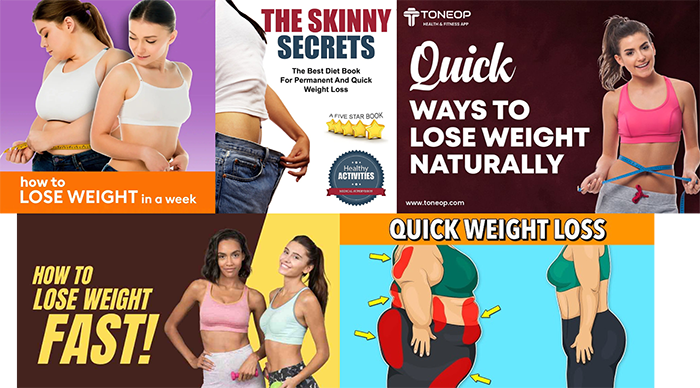
The most powerful formula is simple:
create fear → offer hope → sell the solution.
Fear of weight gain.
Fear of aging.
Fear of rejection.
Fear of not being desirable.
Fear of not being enough.
Then relief arrives in the form of transformation promises.
This emotional swing is neurologically potent. When emotional arousal is high, critical thinking decreases and impulsive decision-making increases. This is not weakness — it is human neurobiology.
Before-and-after imagery amplifies this effect. A transformation photo does not merely show physical change. It compresses time, effort, struggle, and context into a single visual moment. It suggests a new identity, a better life, a higher level of worth.
Yet what remains unseen is the infrastructure behind many of these transformations.
Not all fitness professionals and influencers are dishonest. Many have worked for years, trained intensely, and achieved extraordinary results. But behind many highly visible bodies lies a professional ecosystem: chefs, trainers, therapists, recovery teams, business mentors, photographers, editors, and highly controlled schedules.
This does not invalidate success. But it radically changes the context.
When women compare themselves to these outcomes, they are often unaware they are comparing one overloaded nervous system against an entire professional support structure. What appears to be effortless discipline is often the result of privilege, resources, delegation, and structural support.
Without that context, comparison becomes deeply unfair.
Urgency marketing compounds the problem. “Last chance.” “Summer body countdown.” “Only 7 days left.” Time pressure activates the brain’s loss-avoidance system, producing impulsive action rather than thoughtful commitment.
Then comes the personalization illusion. Many programs feel tailored — “for your hormones,” “for your metabolism,” “for your body type” — while still delivering standardized protocols. When results inevitably plateau, women blame themselves instead of questioning the system.
And this is perhaps the most damaging pattern of all: women are culturally trained to internalize failure.
When a program fails, the conclusion is rarely: This method was flawed.
Instead, it becomes: I wasn’t disciplined enough. I failed.
The industry does not thrive when women become autonomous. It thrives when women remain dependent — cycling endlessly through resets, challenges, and new beginnings.
Quick fixes often do produce short-term results. That is exactly why they remain persuasive.
They work initially because they stimulate dopamine, the neurotransmitter associated with anticipation, motivation, and drive. New plans, bold promises, dramatic timelines, and visible transformations generate a powerful motivational surge.
That is why early discipline often feels effortless.
But dopamine-driven motivation is temporary. As novelty fades, dopamine levels return to baseline. When that happens, discipline no longer feels easy — it feels exhausting.
Then the nervous system enters the equation.
The nervous system’s primary function is survival. Even positive change can be interpreted as threat when it feels restrictive, rigid, emotionally demanding, socially isolating, or physically depleting.
When change feels unsafe, the nervous system seeks familiar patterns. Cravings intensify. Old habits return. Emotional eating resurfaces. Motivation collapses.
This is not sabotage.
It is biological self-protection.
There is another crucial factor: habits stabilize through identity, not effort.
Lasting behavioral change occurs when habits align with who someone believes they are. This is the core insight behind identity-based habit formation, popularized by Atomic Habits. Sustainable change emerges not from forcing behaviors, but from becoming a person who naturally lives those behaviors.
Quick fixes target behavior first. Sustainable change requires nervous system adaptation, emotional integration, and identity alignment.
Speed disrupts this integration.
Decades of research confirm this pattern. Large-scale analyses of weight loss outcomes consistently show that over 80% of individuals regain lost weight within five years. Similar patterns appear in smoking cessation and other behavior change research: fast, pressure-driven change produces faster relapse.
Willpower, under stress, depletes. Biology always wins over force.
When women understand this, shame dissolves. Self-trust rebuilds. And sustainable change finally becomes possible.
If quick fixes fail because they fight human biology and psychology, then the answer is not better discipline.
It is better conditions for change.
Sustainable transformation rests on three interconnected foundations: nervous system regulation, emotional processing, and identity integration.
When women stop chasing discipline and start building awareness-based habits, change becomes sustainable, embodied, and deeply empowering.
For decades, women have been taught that wellness means discipline, sacrifice, and control.
Push harder.
Eat less.
Train more.
Ignore fatigue.
Override emotions.
This narrative has failed women — not because women are weak, but because it ignores female biology, emotional complexity, and real life.
The dominant wellness culture tells women: your body is a project, your emotions are obstacles, your needs come last. It sells the illusion of perfection while quietly fueling dissatisfaction.
Rewriting the female wellness narrative means shifting from control to awareness.
From punishment to understanding.
From performance to embodiment.
From self-blame to self-respect.
Choosing yourself is not selfish. It is corrective.
It means listening to your body, honoring emotional needs, setting boundaries, and designing habits that fit your life. It means stepping out of pressure-driven wellness and into sustainable, autonomy-based wellbeing.
Women do not need better quick fixes.
They need deeper understanding, safer spaces, compassionate guidance, and realistic strategies.
If you have lived inside the cycle of hope, collapse, and self-blame, the most important truth is this:
You were not failing at health.
You were responding normally to a system designed to keep you restarting.
When women understand the psychology, the marketing, and the biology behind quick fixes, something powerful happens.
Shame loses its grip.
Self-trust begins to rebuild.
Choice becomes conscious.
And clarity replaces confusion.
In an industry that thrives on urgency, insecurity, and dependence, understanding becomes autonomy.
If this article resonated with you, I invite you to explore VIVOVibes — a space created for women who are ready to step out of pressure, confusion, and quick fixes, and into understanding, compassion, and sustainable change.
VIVOVibes is not built on extremes or miracle promises. You won’t find shortcuts here, because true transformation cannot be rushed.
What you will find is guidance grounded in awareness, nervous system regulation, emotional understanding, and identity-based habit change — strategies designed to respect your life, your rhythm, and your uniqueness.
At VIVOVibes, women are not passive followers of programs. They become active participants in their own process.
Because your wellbeing is not something to outsource.
It is something to build, understand, and embody.
Explore more articles, resources, and coaching pathways at www.vivovibes.com
Cookies help us improve our services and help us analyze website performance. In the settings, you can choose which cookies we can use. You can withdraw your consent at any time.