
These beliefs shape our habits and often lead us to settle for less than we deserve when it comes to wellbeing. In this article, we’ll explore these common limiting beliefs about health, uncovering how much control we truly have and showing that it’s never too late to make a positive shift in our approach to health and wellness.
Many people can relate to the idea that we don’t have enough time in a day to even think about trying to live a healthier life. Especially if you aren’t already into the lifestyle, it could feel like a mountain of changes that you’ll have to make. You come home from work, take care of the kids, pets, groceries, cooking, and cleaning. By the time you get to give yourself a bit of rest it’s already time for bed. Some people see life as a grind indeed. It gets even worse if you come home from work with no energy left to do any of those things, let alone go for a workout.
Given the circumstances above, it may seem logical to prioritize everything else over going for a workout. Or what about strolling through the supermarket trying to come up with a healthier alternative? We don’t have the brainpower for that every day, do we? But what if I told you that this feeling of low energy is likely connected to a lack of movement and poor meal choices?
Let’s take a look at a few examples of how we could use our time efficiently while incorporating a healthier lifestyle.
One study showed that time-efficient exercises, such as high-intensity interval training (HIIT), are just as effective as longer workouts. Even when they are done at home! Think about a 20-minute session of pushups, sit-ups, and squats. No equipment needed. Essentially, all you need is a floor.
The key is to keep the rest in between sets very short or eliminate them completely if you can. This keeps the heart rate up and running. Less time needed, more energy in return!
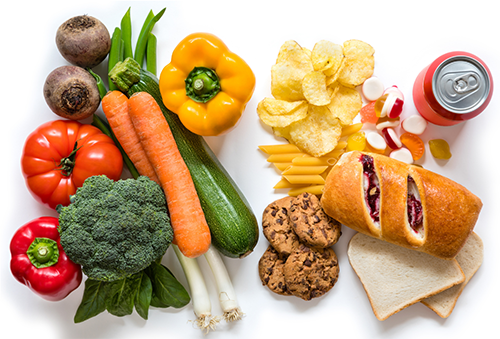
Obesity runs in the family. That’s a common belief people have, paving the way for a dangerous self-fulfilling prophecy of disaster. The fact that you believe the fat on your body is part of your genetic heritage prevents you from even going out and seeking the advice and guidance you so desperately need.
Granted, if you have a predisposition to quickly gain fat, you might be one step behind someone who can eat whatever they want with no visible changes on the scale. However, an unhealthy lifestyle affects even the skinniest among us, because it’s the inside that counts the most.
Fortunately, the brain has this extraordinary ability to change. It’s called neuroplasticity. From growing new neurons to redirecting existing neurons with new tasks and connections, the brain is not a fixed state. And you aren’t either. Breaking through limiting beliefs takes courage and a willingness to let go of the old ways. Change can be scary, but it’s never impossible.
With that said, having a little more weight does increase the risk for many physical ailments. Most of these can be prevented by changing certain habits in your life. But believing you are destined to be overweight blocks every attempt you might have taken otherwise. This is known as the psychological effect called the self-fulfilling prophecy.
For example, you would like to eat healthier to lose a bit of weight. But you see how your parents and siblings are all carrying that extra bit of fat. Or even worse, they all share the same tendency for bad eating habits. The inside of the fridge is proof of that.
What would the people you love think of you when you decide to make a change for yourself? Besides, haven’t you been overweight your entire life? Before you even go out and seek the right kind of guidance for yourself, you drop the ball and go back to the same routines. And the cycle repeats. Believing you can’t change your fate sets you up with the wrong kind of mindset.
Fortunately, the brain has this extraordinary ability to change. It’s called neuroplasticity. From growing new neurons to redirecting existing neurons with new tasks and connections, the brain is not a fixed state. And you aren’t either. Breaking through limiting beliefs takes courage and a willingness to let go of the old ways. Change can be scary, but it’s never impossible.
Research shows that lifestyle choices significantly influence health outcomes, even in individuals genetically predisposed to conditions like heart disease. In a study with over 55,000 participants, the genetic and lifestyle factors were independently related to the susceptibility to coronary artery disease.
Moreover, those with high genetic risk and a healthy lifestyle dropped the risk by 50% relative to people with similar genetic risk and an unhealthy lifestyle. This example reveals the impact a change in habits can have. And it all starts with a belief.
One myth with a widespread belief is that it’s pointless to stop the physical and mental decline that comes with old age. We’ve seen examples of elderly people performing physical feats most of us wouldn’t even dream of trying to give it a shot. Would we think that they are outliers? Having won the genetic lottery and just got lucky?
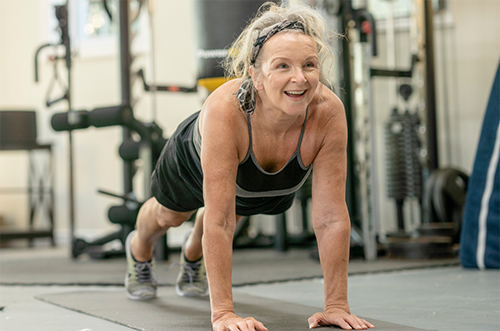
One of the key principles of our physical bodies is “use it or lose it.” In other words, a sedentary lifestyle will make your body wither away slowly. Interestingly, the same principle holds true for our brains. Low physical activity earlier in life has been found to be related to faster aging of the brain later in life.
A study, published in Neurology, explored how fitness levels of people in their 40s could influence brain health decades later. Researchers tracked over 1,000 middle-aged participants, who initially underwent treadmill exercise tests that measured their cardiovascular fitness, blood pressure, and heart rate responses. Approximately 20 years later, these participants received brain scans to measure their total brain volume, an important indicator of brain health.
The results revealed a strong connection between midlife fitness levels and brain size later in life. Participants with better cardiovascular fitness and healthier heart rate and blood pressure responses during exercise tended to have larger brain volumes when assessed two decades later. Meanwhile, those with lower fitness levels and higher blood pressure responses during exercise were more likely to show reduced brain volume. This reduction in brain size is often associated with aging and cognitive decline, suggesting that fitness and cardiovascular health in midlife are linked to physical brain health across the lifespan.
Or we could take a look at how humanity used to live as hunters and gatherers for most of its history. Always on the move. Surviving by staying active. Only in relatively recent history did it become possible to stay put and have our food and water come to us. If our brains stay healthier in the long run by staying physically active, doesn’t that mean something?
One study even found that the elderly who significantly increased their physical activity showed improvements in stamina, verbal memory, executive functioning, and global cognition, compared to elderly who stayed inactive. This shows that you can start at an older age and still experience the benefits of living an active and healthy life.
Limiting beliefs may feel deeply ingrained, but with awareness and the willingness to challenge them, they lose their power. Science continues to show us that lifestyle choices can have a profound impact on our health, regardless of age or genetic predisposition. So, if you find yourself thinking that it’s too late, or that change isn’t possible, remember: each step you take to challenge these beliefs brings you closer to a healthier, more empowered life. It’s time to let go of these limitations and embrace the potential for change that lies within us all.
Download our free 3-day online course: Beliefs of Power Discover and break free from the beliefs that are holding you back, and replace them with empowering ones that support your journey to a healthier, more fulfilled lifestyle. Take the first step toward becoming the person you’re meant to be!
Cookies help us improve our services and help us analyze website performance. In the settings, you can choose which cookies we can use. You can withdraw your consent at any time.